

Ankole-Kigezi Leaders Raise Concerns Over Access and Accountability of GROW Funds
Rukungiri; Leaders from the Ankole and Kigezi sub-regions have raised concerns over irregularities in the implementation of the GROW project, saying difficulties in accessing funds and tracing beneficiaries have made it hard to see the project’s impact on the ground.
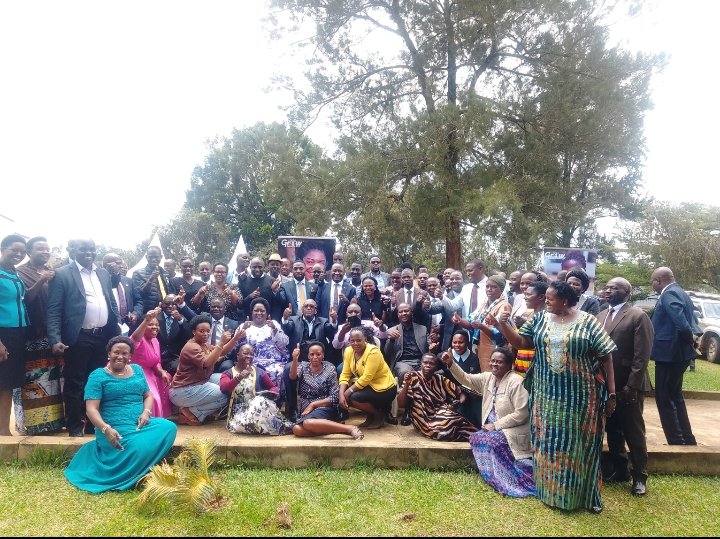
The concerns were raised on October 8, during a one-day workshop for Ankole-Kigezi stakeholders held at Riverside Hotel in Rukungiri Municipality. The workshop was Organized by Grow Project which is being implemented by the Ministry of Labour and Social Development.
The meeting brought together Resident District Commissioners, LCV chairpersons, municipal mayors, town clerks, Chief Administrative Officers, District Community Development Officers, women leaders and other stakeholders.
While presenting their concerns, Wycliff, the Principal Secretary to the Chief Administrative Officer of Sheema District, Peace Musiime, the NRM Women’s League Chairperson for Ntungamo District, Jasinta Musiime Kakururu, the Rukungiri District Women Entrepreneurship Programme chairperson, Faith Tumwebaze, the Kiruhura District Community Development Officer, and Bright Tukunda, the Ibanda District LCV chairperson, said many women have failed to benefit from the project because of the requirements imposed by commercial banks.
They said banks require beneficiaries to provide documents such as land titles and business plans, while some women are instead encouraged to take commercial bank loans.
Wycliff said that since 2023, only 12 women in Sheema District have benefited from the GROW project, which he said raises questions about its implementation.
Peace Musiime from Ntungamo District said a commercial bank gave her a loan of 18 million shillings to be repaid within nine months at an interest rate of 20 percent, which she said was contrary to the project guidelines.
Jasinta Musiime Kakururu said that during a previous workshop in Rubanda, stakeholders were told that 285 individuals from Rukungiri District had benefited from the project.
However, she said there was no evidence provided to support the figure and, as a leader, she could not verify the beneficiaries.
The leaders also said it was difficult for district officials to trace beneficiaries because they are unable to access beneficiary information from commercial banks.
They said ministry officials had told them that beneficiary information could not be disclosed to the public.

Rukungiri Resident District Commissioner Bron Kikanshemeza said his office only knows that GROW is a government project but has limited information about how it is implemented.
He said his office does not know how beneficiaries are selected, how funds are allocated to them or how the project is monitored.
Kikanshemeza added that no district focal person or other official responsible for the GROW project has visited his office to explain its implementation.
Minister for Gender, Labour and Social Development Rtd. Lt. Gen. Henry Tumukunde said the GROW project involves large sums of money, citing Rukungiri District, which he said was allocated 2.6 billion shillings.
He, however, questioned the project’s visible impact on the ground, saying it was difficult to identify beneficiaries when compared with the records held in government offices.
Tumukunde said the concerns were not limited to GROW but also affected other government programmes, including the Uganda Women Entrepreneurship Programme (UWEP).
Tumukunde also questioned the role of RDCs, LCV chairpersons, municipal and city mayors, town clerks and Chief Administrative Officers, saying they should take responsibility for addressing challenges affecting communities in their areas instead of waiting for national leaders to expose problems within their jurisdictions.
Responding to the concerns, National GROW Project Coordinator John Ssengendo, who also represented the Permanent Secretary of the Ministry of Gender, Labour and Social Development, said the government chose to channel the funds through commercial banks to improve loan recovery and reduce defaulting.
He said commercial banks are responsible for recovering the money from beneficiaries and selecting beneficiaries based on their ability to repay the loans.
On concerns over access to beneficiary lists, Ssengendo said even the Ministry of Gender, Labour and Social Development does not directly hold the full list of beneficiaries.
He explained that accessing such information would require following the appropriate legal process, including obtaining it through the Attorney General.
Tags: Countryradio, Gen Tumukunde, Ministry of Gender Labour and Social Development, Uganda